Heated-cable roof systems sized for New England winters. Self-regulating cable, controlled by an aspirated thermostat, installed at the eaves and valleys before ice dams form — not after the damage is already done.
An ice dam forms when heat escaping from the attic melts the snow on the upper roof, water runs down to the cold eaves, refreezes, and forms a ridge. The next melt cycle can't drain past the ridge — so water backs up under the slate or shingles and finds its way inside. The roof itself often survives. The plaster ceiling and the insulation behind it do not.
In Boston and Greater Boston, ice dam season runs roughly mid-December through mid-March. Every winter, we get emergency calls from homeowners with brown stains on the ceiling and water dripping from light fixtures. The fix in February is expensive and the damage is usually already done.
A heated roof ice melt system is the only reliable preventive measure. Insulation and ventilation help — but they don't stop the cycle on Boston's steepest slate roofs, north-facing eaves, or any roof with deep valleys.
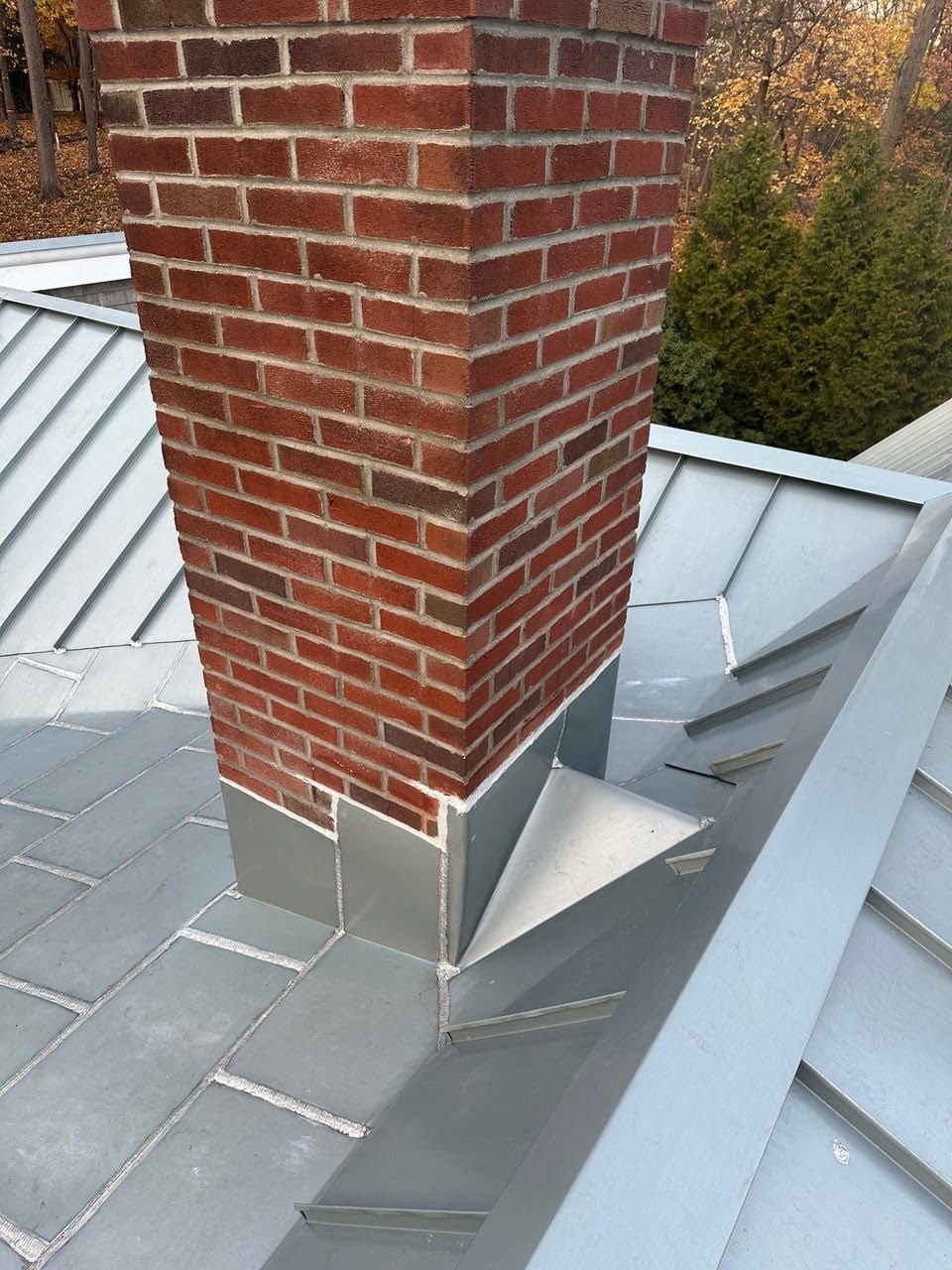
Not gimmick heat-tape from the hardware store. Real systems use self-regulating cable rated for outdoor roof use, sized to your eave length and roof pitch, controlled by an aspirated thermostat that fires only when needed.
Industrial-grade cable that adjusts heat output based on local temperature. Cold spots get more heat; warm spots get less. Lasts 15-20 years.
Zig-zag pattern at the eaves, straight runs in valleys, gutters and downspouts heated where the freeze-thaw cycle compounds.
Copper clips on slate, stainless on metal. No nails through the roof material. Clips spec'd to the manufacturer's roof type.
Fires only when outdoor temp + humidity indicate ice-forming conditions. Saves power, extends cable life, doesn't run all winter.
Cable manufacturer warranty + our installation warranty. We document the install with photos and a load calculation.
Most ice melt installations happen September through November. We assess your eaves, valleys, and gutter system, calculate cable runs, and install before snow falls. Installations during active winter are possible but cost roughly 40% more — we're working in the cold, on icy ladders, in the conditions the system is designed to prevent.
If you've had an ice dam in the last three winters, you're a candidate. If you have a north-facing eave over a heated room, you're a strong candidate. If you have a slate roof, deep valleys, or a complex roofline, you're an obvious one.
Our partner platform Benefitra built the Ice Damming Risk Score: scores your home based on roof geometry, attic insulation, and existing ice protection. Outputs an honest priority order: insulation, ice-shield, ice-melt cable, or no action needed.
Score My Risk →Scoring covers attic R-value, soffit ventilation, roof pitch, eave length, prior ice-dam history, and chimney/valley count. The tool will tell you honestly if a $200 insulation upgrade fixes it before a $4,000 ice melt cable system is needed.
Open the Calculator →Free, no obligation. We'll walk your eaves, score your risk, and tell you honestly whether ice melt is the right answer or whether insulation alone will do it.
Schedule Your Assessment →