

In this article 5 sections
- Understanding Cosmetic vs. Reconstructive Surgery
- Are Reconstructive Surgeries, Such as Post-Mastectomy Breast Reconstruction, Always Covered by Insurance?
- What Types of Plastic Surgeries Are Typically Covered by Health Insurance?
- How Do Insurance Companies Differentiate Between Cosmetic and Medically Necessary Plastic Surgery?
- Plastic Surgery Insurance Coverage: Getting Expert Guidance
Plastic surgery insurance coverage depends on one question: is the procedure cosmetic or medically necessary? Health plans rarely pay for surgery that only changes appearance. They often pay, fully or in part, for surgery that restores function or repairs damage from injury, disease, or a birth defect.
Demand is growing on both sides. The American Society of Plastic Surgeons reported that cosmetic surgical procedures rose 7% and reconstructive procedures rose 6% in 2025. This article explains the difference between the two, which surgeries plans commonly cover, and how insurers decide. BENEFITRA helps employers and families understand what their health plans cover before surgery is scheduled.
Understanding Cosmetic vs. Reconstructive Surgery
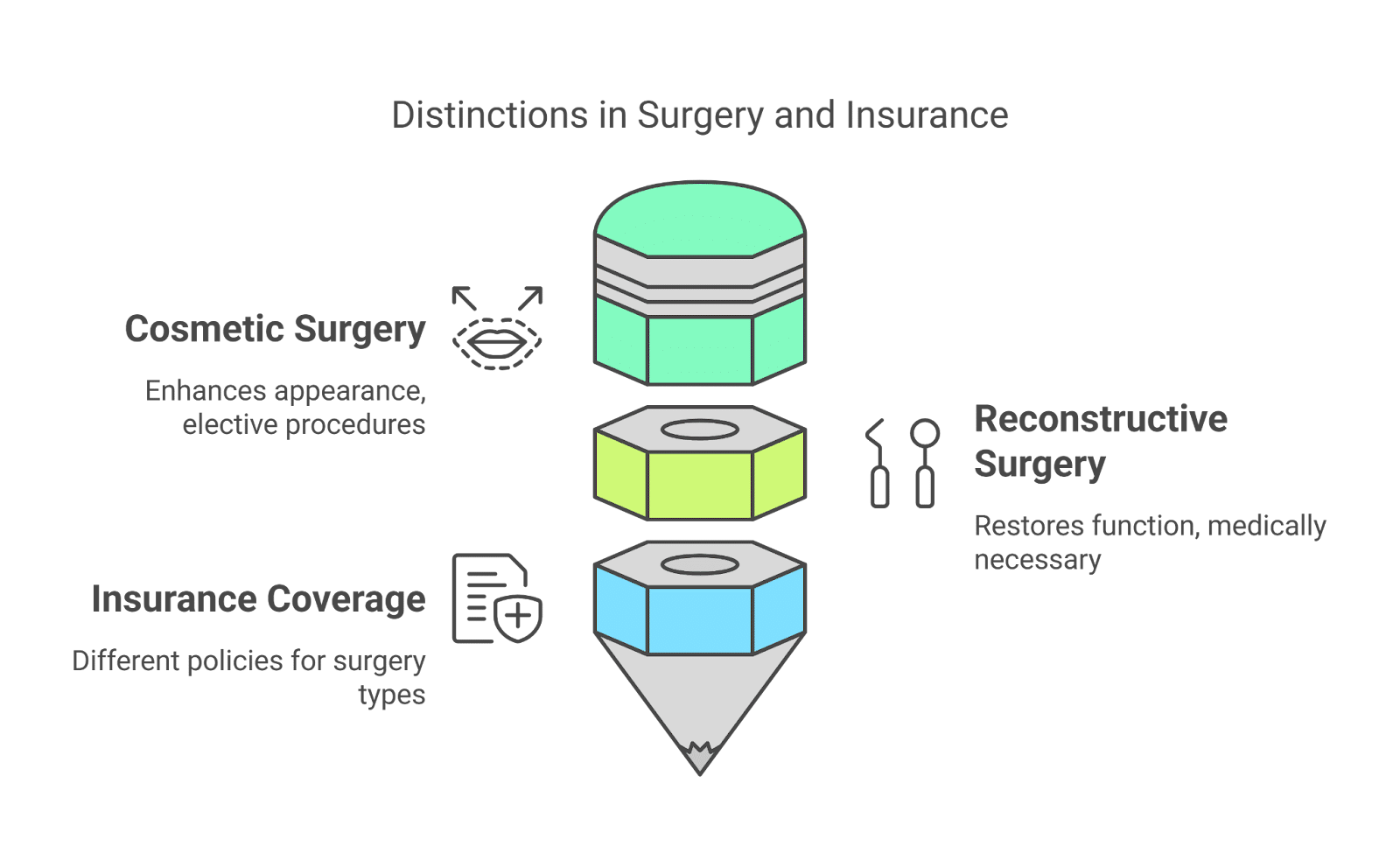
Plastic surgery falls into two broad categories: cosmetic surgery and reconstructive surgery.
- Cosmetic Surgery: Cosmetic procedures change appearance rather than treat a medical condition. Examples include facelifts, liposuction, rhinoplasty, and breast augmentation when there is no medical reason. Health plans generally exclude these elective procedures because they do not treat an illness or injury.
- Reconstructive Surgery: Surgeons perform these procedures to correct problems caused by congenital defects, trauma, infection, tumors, or disease. The goal is to restore normal function, with a more normal appearance as a second benefit. Common examples include repair of traumatic injuries, breast reconstruction after mastectomy, and cleft lip and palate repair. Medicare follows the same line: it does not cover most cosmetic surgery, but it does cover surgery needed for an accidental injury, to improve the function of a malformed body part, or to reconstruct a breast after a mastectomy for cancer.
Knowing which category a procedure falls into is the first step in predicting whether a plan will pay for it.
Are Reconstructive Surgeries, Such as Post-Mastectomy Breast Reconstruction, Always Covered by Insurance?
Breast reconstruction is a vital step in recovery for many breast cancer patients. The Women’s Health and Cancer Rights Act (WHCRA) of 1998 requires group health plans and individual health insurance policies that cover mastectomies to also cover reconstruction. According to CMS, this includes:
- All stages of reconstruction of the breast on which the mastectomy was performed.
- Surgery and reconstruction of the other breast to produce a symmetrical appearance.
- Prostheses and treatment of physical complications of all stages of the mastectomy, including lymphedema.
There are limits. WHCRA does not require a plan to cover mastectomy in the first place, and some church plans and government plans are exempt. Plans may apply deductibles and coinsurance to reconstruction, but no more than they apply to other benefits, according to the U.S. Department of Labor. Plans must also send a WHCRA notice at enrollment and every year after. Network rules and prior authorization still apply, so patients should confirm the details with their plan before surgery.
What Types of Plastic Surgeries Are Typically Covered by Health Insurance?
Most cosmetic procedures are not covered, but plastic surgeries deemed medically necessary often receive full or partial coverage. Below are common examples. Each plan sets its own medical policy, so the criteria vary.
1. Breast Reduction (Reduction Mammaplasty)
Health insurance may cover breast reduction when excess breast tissue causes medical problems like:
- Chronic back, neck, or shoulder pain
- Rashes or infections under the breasts
- Posture problems
- Nerve pain
Plans usually want records from your provider showing the problems continued after non-surgical treatment, such as physical therapy and pain medication.
2. Eyelid Surgery (Blepharoplasty)
Eyelid surgery is often cosmetic, but when a drooping eyelid blocks vision it can be medically necessary. Medicare has required prior authorization for blepharoplasty in hospital outpatient departments since July 1, 2020, and many private plans use similar reviews. Medicare contractor policies, such as this local coverage determination, show the kind of proof plans ask for:
- Photographs showing the eyelid drooping (that Medicare policy requires them)
- Visual field tests or clinical notes showing the eyelid blocks the upper field of vision
- A physician’s statement supporting the medical need
3. Nose Surgery (Rhinoplasty and Septoplasty)
Rhinoplasty is often done for appearance, but nose surgery can also treat real medical problems. A plan might pay when the surgery fixes:
- A deviated septum that blocks airflow (septoplasty)
- Chronic sinus infections
- Structural problems or injuries that make breathing difficult
Rhinoplasty is also on Medicare’s outpatient prior authorization list, so expect paperwork before approval.
4. Reconstructive Hand Surgery
Plans normally cover surgery that restores hand function, such as carpal tunnel release and repair of deformities from rheumatoid arthritis.
5. Skin Cancer Removal and Reconstruction
Plans frequently cover reconstruction, such as skin grafts or flap surgery, after skin cancer is removed.
6. Gender-Affirming Surgeries
Coverage for gender-affirming surgery depends heavily on the type of plan and the state. Starting with plan year 2026, a federal rule says individual and small group plans may not cover “specified sex-trait modification procedures” as an essential health benefit. Insurers may still choose to cover them outside the essential health benefits package, subject to state law. Large employer plans and self-funded plans set their own rules, and 71% of covered workers are in self-funded plans in 2026, according to KFF. Check your plan documents for current terms.
How Do Insurance Companies Differentiate Between Cosmetic and Medically Necessary Plastic Surgery?
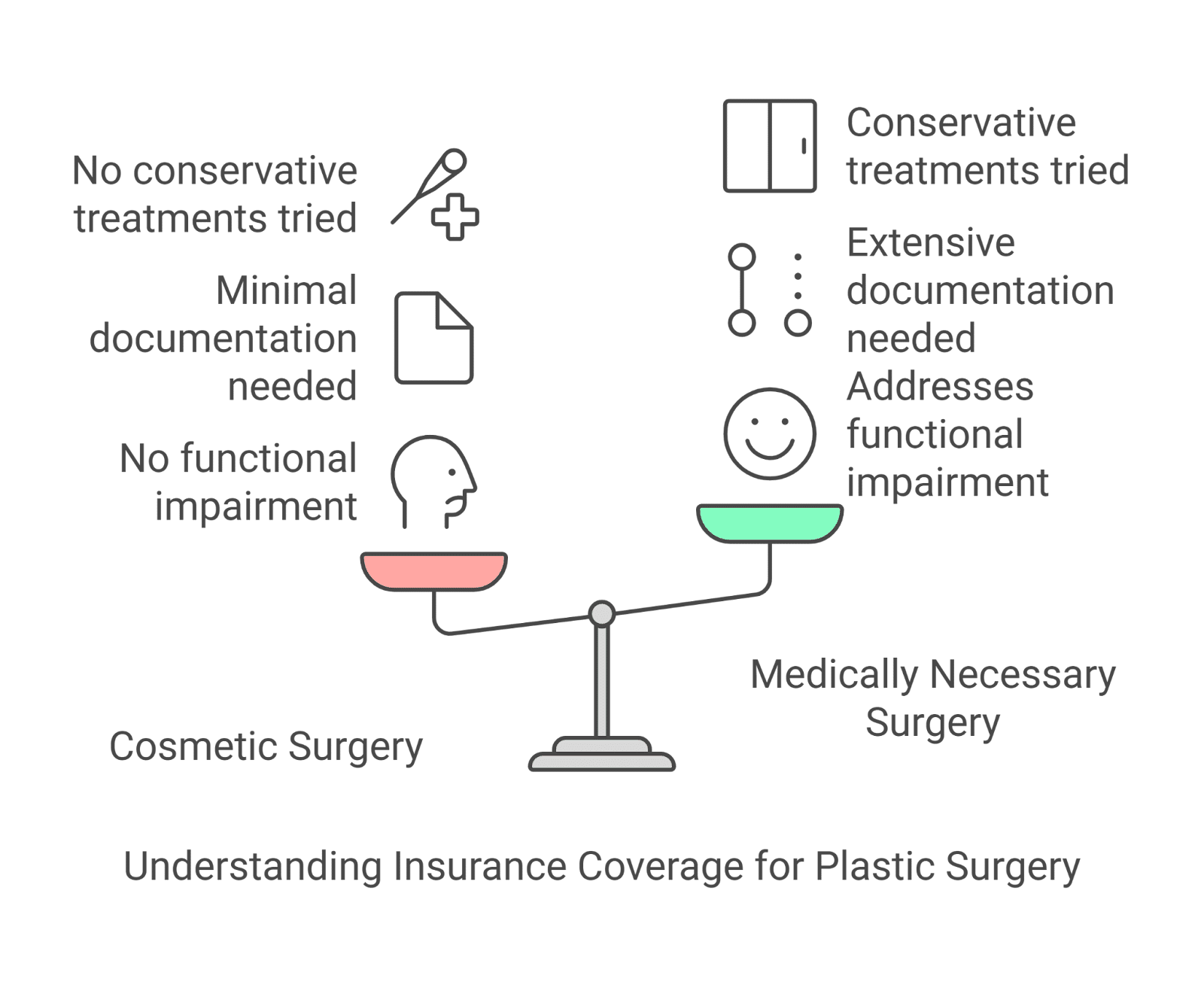
Insurers apply written medical policies to decide whether a surgery is medically necessary. Common factors include:
- Functional Impairment: Procedures that fix a problem with how the body works (vision obstruction, chronic pain, breathing difficulty) have a better chance of coverage.
- Medical Documentation: Doctor records of symptoms, diagnoses, and failed non-surgical treatments.
- Conservative Treatments: Many policies require patients to try physical therapy or medication before approving surgery.
- Photographic Evidence: Some insurers ask for photographs to show the procedure is medically necessary.
- Pre-Authorization: Most plans require approval before reconstructive surgery. Without it, a claim can be denied even when the surgery qualifies.
Every plan has different rules. Review your Summary of Benefits and Coverage and plan documents, and work with your doctor on the paperwork. If a claim is denied, you have the right to appeal.
Plastic Surgery Insurance Coverage: Getting Expert Guidance
Plastic surgery coverage has many moving parts. Patients need to know whether a procedure is cosmetic or reconstructive, gather the right records, and work with their insurer on approval.
BENEFITRA helps individuals, families, and businesses compare health insurance plans and choose coverage that fits their needs. Our services include:
- Helping clients compare different health insurance plans
- Identifying policies that cover reconstructive procedures
- Helping clients through claims and approvals for plastic surgery coverage
BENEFITRA helps people find plans that cover medically necessary plastic surgery and understand the coverage they already have. Explore health plan options in your state or contact our team to learn more.
Sources
- American Society of Plastic Surgeons, “Lift Procedures Led Growth as Demand for Restoration Drove Plastic Surgery in 2025, New ASPS Report Reveals,” September 2026. plasticsurgery.org
- Medicare.gov, “Cosmetic surgery” coverage page, accessed November 2026. medicare.gov
- Centers for Medicare & Medicaid Services, “Women’s Health and Cancer Rights Act (WHCRA),” accessed November 2026. cms.gov
- U.S. Department of Labor, Employee Benefits Security Administration, “Your Rights After a Mastectomy,” accessed November 2026. dol.gov
- Centers for Medicare & Medicaid Services, “Prior Authorization Process for Certain Hospital Outpatient Department (OPD) Services,” accessed November 2026. cms.gov
- Centers for Medicare & Medicaid Services, Medicare Coverage Database, Local Coverage Determination L34194, “Blepharoplasty, Eyelid Surgery, and Brow Lift.” cms.gov
- U.S. Department of Health and Human Services, “Patient Protection and Affordable Care Act; Marketplace Integrity and Affordability,” Federal Register, June 25, 2025. federalregister.gov
- KFF, “2026 Employer Health Benefits Survey,” October 2026. kff.org