

The U.S. Department of Veterans Affairs (VA) runs the country's largest integrated health care system, with 1,380 health care facilities serving more than 9.1 million enrolled veterans. Over several years, the VA has improved veterans healthcare access, quality and efficiency. Real obstacles remain, and many veterans still struggle to get prompt care. This article covers the progress the VA has made, the challenges that persist, the services it provides, and the steps it is taking to cut delays, with figures current as of November 2026.
Improvements in Veterans VA Healthcare Access
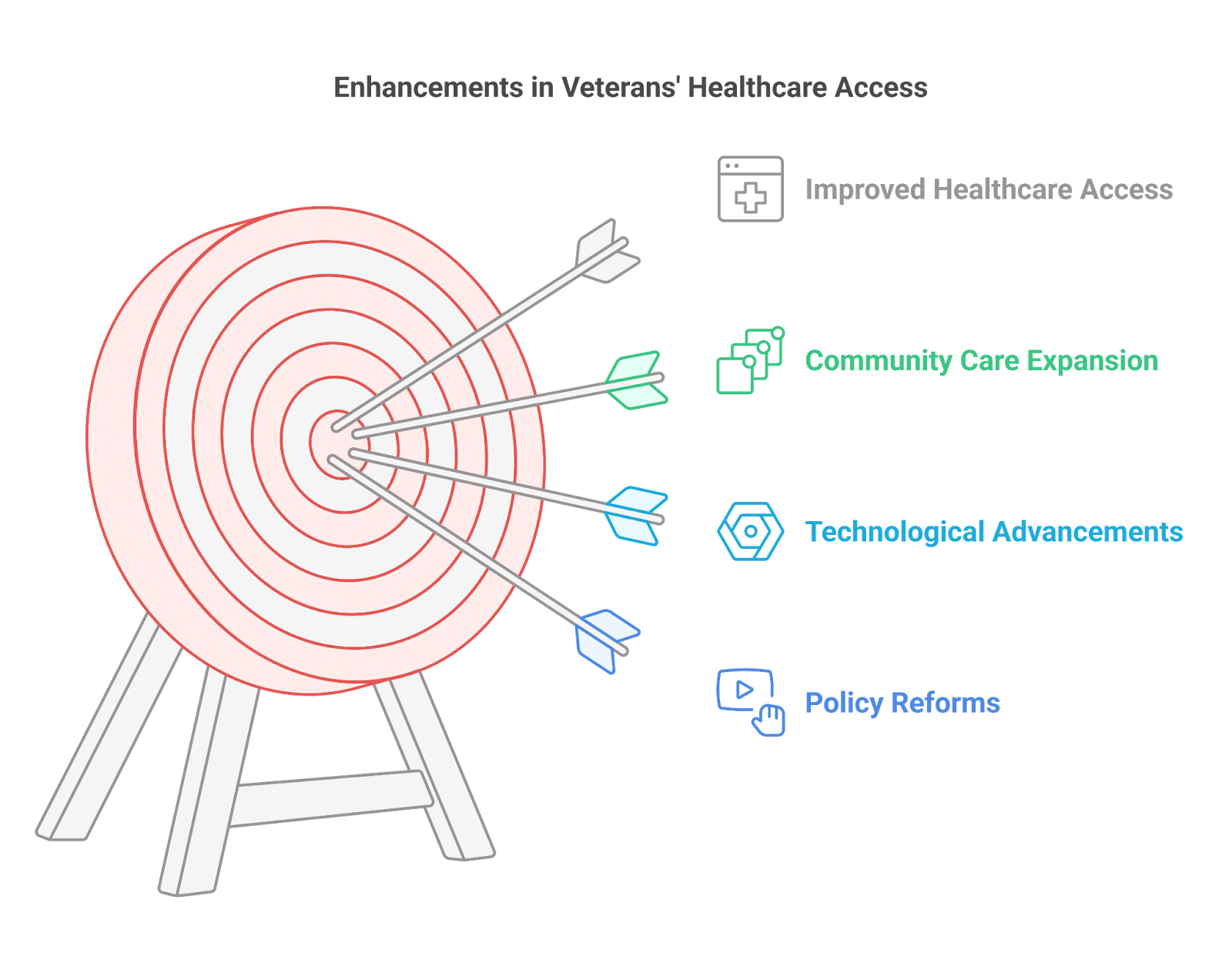
The US Veterans Affairs Department has launched multiple programs to enhance access to healthcare for veterans. Some of the key advancements include:
Expansion of Community Care
- Veterans who face long waits or live too far from a VA facility can see private-sector providers through the VA Community Care Program. Under VA access standards, a veteran may qualify when the VA cannot schedule care within 20 days (primary care and mental health) or 28 days (specialty care), or when the average drive is more than 30 or 60 minutes.
- Under the MISSION Act, enrolled veterans who have received VA care in the past 24 months can get urgent care at in-network community clinics. Any copay is billed later.
- In August 2025, the VA extended new community care authorizations to 12 months for 30 standard types of care. Before that, some specialty referrals were rechecked every 90 to 180 days.
Technological Advancements
- Telehealth Services: VA telehealth lets veterans have remote video visits with doctors without traveling. In fiscal 2025, more than 2.9 million veterans used VA telehealth for over 14.6 million episodes of care, and 91.7% of users said they were satisfied. For how private plans handle virtual care, see our guide to telehealth in private insurance plans.
- My HealtheVet on VA.gov: My HealtheVet now lives on VA.gov and in the VA Health and Benefits app. Veterans use it to manage appointments, messages, medications and medical records.
- Artificial Intelligence (AI) and Predictive Analytics: The VA uses data models to predict health risks. Its REACH VET program, for example, scans health records to flag veterans at higher risk of suicide so their care team can reach out early.
Policy Reforms and Legislative Support
- The PACT Act expands VA health care and benefits for veterans exposed to toxic substances such as burn pits, Agent Orange and radiation.
- Since March 5, 2024, the VA has opened health care enrollment to millions of these veterans, years earlier than the law required.
Persistent Challenges in Veterans Healthcare Access
While progress has been made in veterans healthcare, numerous obstacles still affect access to care and treatment quality.
Finding Your Way Through the System
- Complex Bureaucracy: VA processes and eligibility rules can be hard for veterans to understand and use.
- Lack of Awareness: Some veterans, especially those who have never enrolled, do not know about all the benefits they can receive.
- Limited Outreach Programs: Additional initiatives must be developed to educate veterans about their available healthcare benefits.
Mental Health Services
- High Suicide Rates: In 2023, 6,398 veterans died by suicide. After adjusting for age, the suicide rate was 49.7% higher for male veterans and 103.1% higher for female veterans than for non-veteran adults of the same sex, according to the VA 2025 National Veteran Suicide Prevention Annual Report. Help is available any time through the Veterans Crisis Line.
- Delays in Treatment: Numerous veterans face extended waiting periods before receiving mental health appointments.
- Stigma Around Seeking Help: Stigma and career-related fears keep many veterans from seeking mental health treatment. Learn how private plans cover this care in our guide to mental health coverage in U.S. health insurance.
Staffing Shortages
- Understaffed VA Facilities: In fiscal 2025, VA facilities reported 4,434 severe occupational staffing shortages, up 50% from 2,959 in fiscal 2024, according to the VA Office of Inspector General. 94% of facilities reported severe shortages of medical officers and 79% reported them for nurses.
- High Turnover Rates: Retention problems disrupt steady care. The VA said it was on pace to reduce staff by nearly 30,000 by the end of fiscal 2025 through attrition, retirements, deferred resignations and a hiring freeze.
- Competition with Private Healthcare: VA hospitals can lose skilled professionals to private health systems that offer higher pay.
The VA Delivers Primary Services and Benefits to Veterans
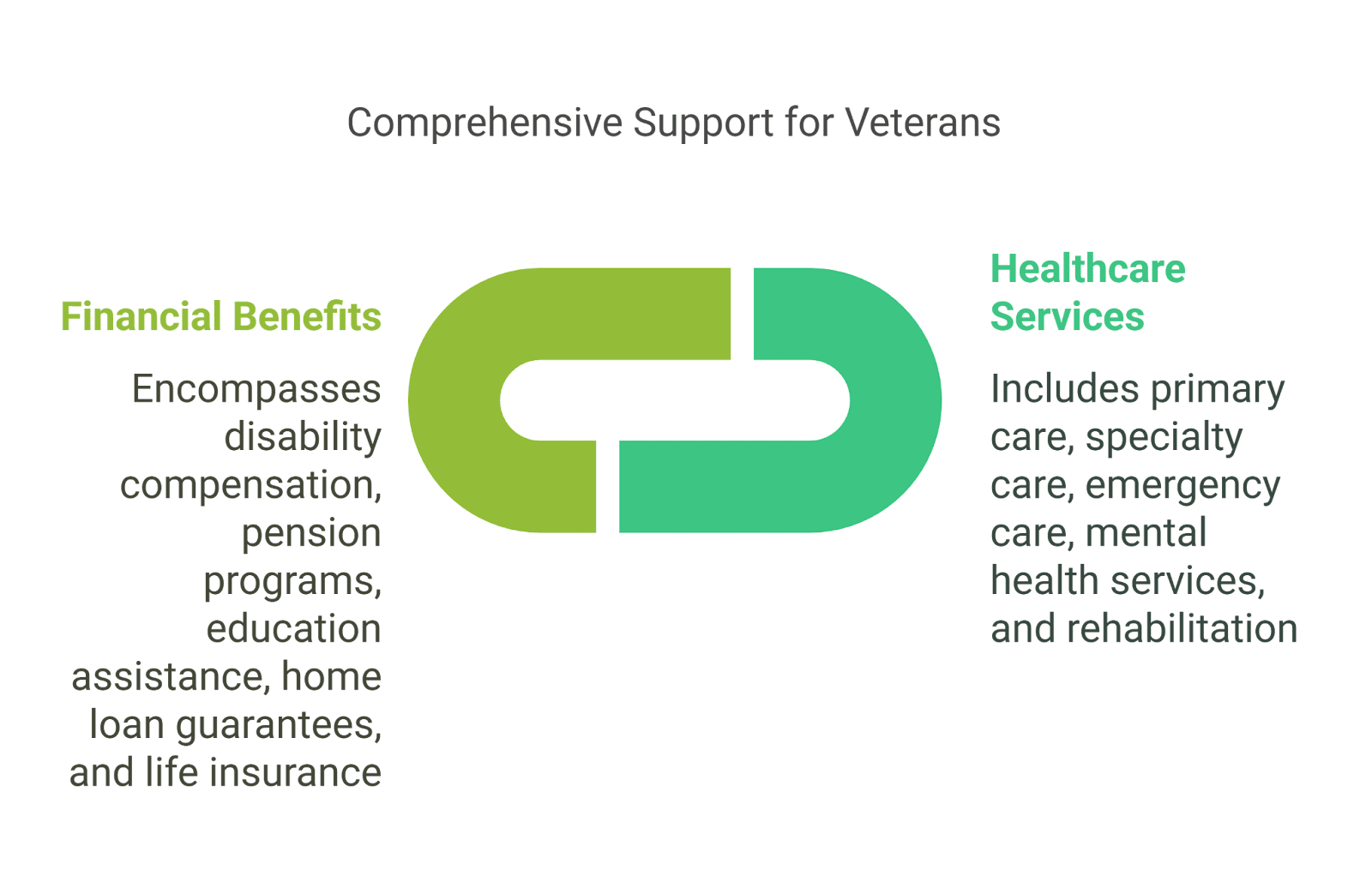
The VA provides a wide range of services and benefits to support veterans' health and well-being, including:
Healthcare Services
- Primary Care & Preventive Medicine: Routine check-ups, screenings, and immunizations.
- Specialty Care: Treatment for heart disease, cancer, and orthopedic and neurological conditions.
- Emergency & Urgent Care: Veterans have access to emergency medical services through both VA clinics and external healthcare facilities.
- Mental Health Services: Therapy, counseling, and psychiatric care.
- Rehabilitation & Physical Therapy: The VA offers rehabilitation and physical therapy services to help veterans who are healing from surgical procedures or injuries.
Financial and Compensation Benefits
- Disability Compensation: Veterans with service-connected disabilities receive monthly payments from the VA.
- Pension Programs: VA pension provides financial support to wartime veterans with limited income and to their survivors.
- Education Assistance: The GI Bill helps pay for tuition and housing while veterans study.
- Home Loan Guarantees: VA-backed home loans can offer more favorable terms than many conventional loans.
- Life Insurance: Several VA life insurance options protect veterans and their families.
How the VA Is Working to Reduce Wait Times
The VA has launched several initiatives to improve access and efficiency and to cut delays.
Streamlining Appointment Scheduling
- VA Online Scheduling: Veterans can schedule and cancel some VA appointments online and request approved community care appointments.
- Automated Appointment Reminders: Reduces no-show rates and optimizes scheduling.
Enhancing Quality Assurance Measures
- VA Office of Inspector General (OIG) Oversight: The OIG runs routine inspections and audits of VA health care quality.
- Patient Satisfaction Surveys: Continuous feedback collection to improve patient experience.
- Performance Metrics for Providers: Clinicians are measured on treatment results and patient feedback.
Collaboration with External Healthcare Partners
- Academic Partnerships: The department partners with academic institutions to develop medical professionals with a focus on veteran healthcare.
- Non-Profit Organizations: VA teams work with nonprofits that provide extra health services and support.
- Public-Private Partnerships: The VA works with private providers to expand available services.
Bridging the Gaps: Where Private Coverage Fits for Veterans
Wider community care, telehealth growth and policy reforms such as the PACT Act have improved veterans healthcare access. The VA still faces bureaucratic complexity, mental health service gaps and staffing shortages.
VA health care counts as qualifying health coverage under the Affordable Care Act. Still, many veterans want other options, for their family members who are not covered by the VA or for care closer to home. BENEFITRA connects veterans with health insurance providers to find plans that fit their needs. We help veterans who need more than VA health care find quality plans that match their health needs and budget. Compare options on our health insurance plans page.
The VA needs ongoing partnerships with private providers, support organizations and policymakers to deliver proper care to veterans. By solving persistent problems and testing new approaches, the system can better serve those who served.
Sources
- U.S. Department of Veterans Affairs, Veterans Health Administration, About VHA, accessed November 2026.
- U.S. Department of Veterans Affairs, Eligibility for community care outside VA, updated September 11, 2025.
- U.S. Department of Veterans Affairs, Getting urgent care at VA or in-network community providers, updated September 17, 2024.
- VA News, VA offers yearlong community care authorizations for 30 services, August 4, 2025.
- U.S. Department of Veterans Affairs, VA Telehealth Services, accessed November 2026.
- VA News, 91.7% of Veterans who use VA telehealth are satisfied, January 6, 2026.
- U.S. Department of Veterans Affairs, My HealtheVet on VA.gov: What to know, updated November 3, 2026.
- VA News, VA REACH VET initiative helps save Veterans lives, April 3, 2017.
- U.S. Department of Veterans Affairs, The PACT Act and your VA benefits, updated June 2, 2026.
- VA Office of Suicide Prevention, 2025 National Veteran Suicide Prevention Annual Report, Part 2: Report Findings, 2026.
- Veterans Crisis Line, Veterans Crisis Line, accessed November 2026.
- VA Office of Inspector General, OIG Determination of Veterans Health Administration's Severe Occupational Staffing Shortages Fiscal Year 2025 (Report 25-01135-196), August 12, 2025.
- VA News, VA to reduce staff by nearly 30K by end of FY2025, July 7, 2025.
- U.S. Department of Veterans Affairs, VA disability compensation, accessed November 2026.
- U.S. Department of Veterans Affairs, VA pension benefits, accessed November 2026.
- U.S. Department of Veterans Affairs, Education and training (GI Bill), accessed November 2026.
- U.S. Department of Veterans Affairs, VA home loans, accessed November 2026.
- U.S. Department of Veterans Affairs, VA life insurance, accessed November 2026.
- U.S. Department of Veterans Affairs, Manage your VA health appointments, accessed November 2026.
- HealthCare.gov, Veterans and the Health Insurance Marketplace, accessed November 2026.