

In this article 7 sections
- Understanding the Current State of Health Insurance
- How Recent Policy Changes Affect Coverage
- Strategies for Securing Affordable Medical Insurance
- The Role of the Affordable Care Act in Reducing Costs
- Embracing Technology for Smarter Health Insurance Decisions
- Looking Ahead: The Future of Affordable Healthcare
- Conclusion
Small business owners, freelancers and sole proprietors need to prioritize finding affordable medical insurance more than ever. Rising healthcare costs, policy changes and complex rules make it easy to overspend. With the right information and resources, you can still find a quality plan at a price you can manage.
This guide covers your coverage options, the rule changes for 2026 and 2027, and ways to save money without losing essential coverage.
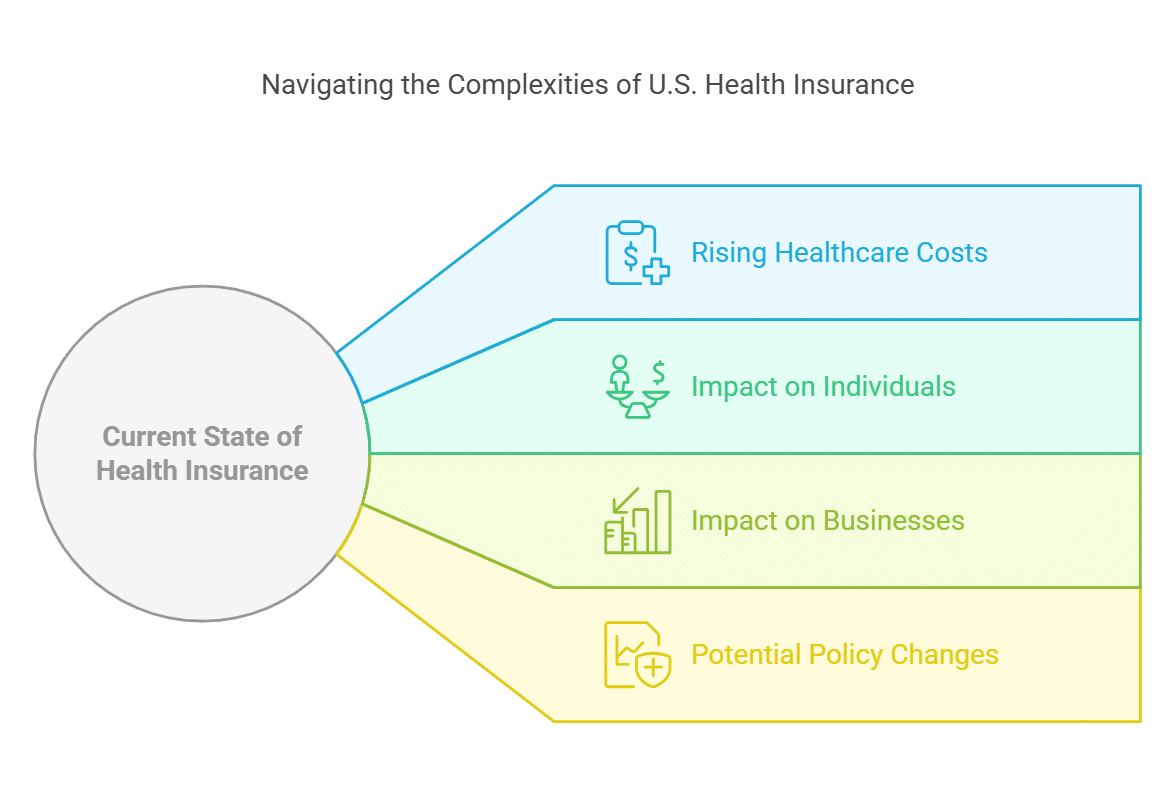
Understanding the Current State of Health Insurance
U.S. health coverage keeps getting more expensive. In the KFF 2026 Employer Health Benefits Survey, the average annual premium for employer family coverage reached $28,303, up 5% from 2025, and workers paid $7,471 of it on average. Single coverage averaged $9,804. Rising costs hit both people and companies, so cost-reduction strategies matter.
Individual coverage costs jumped too. The enhanced ACA premium tax credits expired at the end of 2025. KFF found that the average monthly premium payment for Marketplace enrollees, after tax credits, rose 58% in 2026, from $113 to $178, and that average enrollment could fall to about 17.5 million from 22.3 million in 2025. Our article on the 2026 ACA subsidy cliff covers what this means for employers.
How Recent Policy Changes Affect Coverage
Federal policy shapes what you pay. The One Big Beautiful Bill Act of 2025 and yearly federal rules changed several things for 2026 and 2027:
- Full repayment of extra credits: Starting with tax year 2026, if your advance premium tax credit is more than you qualify for, you must repay the full excess. The old repayment caps no longer apply, so report income changes to the Marketplace promptly.
- Higher out-of-pocket caps: The maximum out-of-pocket limit for ACA plans rises from $10,600 self-only and $21,200 family in 2026 to $12,000 and $24,000 in 2027.
- New HSA options: Starting January 1, 2026, bronze and catastrophic plans count as HSA-compatible, and certain direct primary care arrangements no longer block HSA contributions. See our guide to direct primary care and HSAs.
- Narrower subsidy eligibility: For 2027 coverage, many lawfully present immigrants lose subsidy eligibility, including H-1B visa holders, refugees and asylees.
A lower premium often means a higher deductible. KFF found the average Marketplace deductible rose 37% in 2026, from $2,759 to $3,786, as more enrollees moved to bronze plans. Compare the total yearly cost of each option, not just the monthly premium.
Strategies for Securing Affordable Medical Insurance
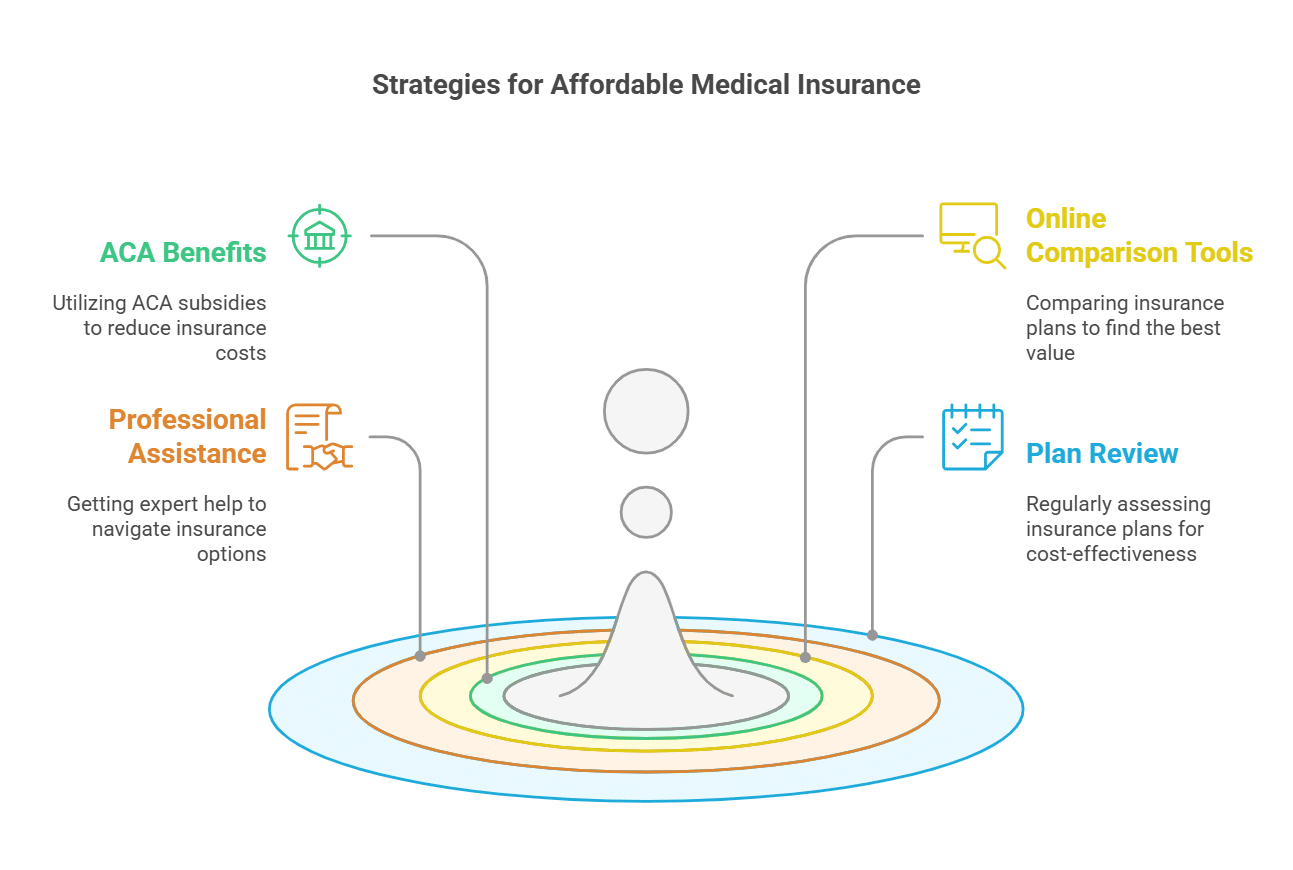
Even though healthcare costs continue to climb, healthcare consumers can find affordable coverage options that still provide critical benefits. Here are some practical strategies:
1. Take Advantage of the Affordable Care Act (ACA)
ACA financial help comes in two forms. Premium tax credits lower your monthly premium, and cost-sharing reductions lower deductibles and copays on silver plans for eligible enrollees. You get both by applying through HealthCare.gov or your state’s Marketplace.
With the enhanced credits gone, premium tax credits are again limited to income between 100% and 400% of the federal poverty level. For 2027 coverage, that cutoff is $63,840 for a single person and $109,280 for a family of three. Open enrollment for 2027 runs November 1, 2026 to January 15, 2027 in most states. Pick a plan by December 15 for coverage that starts January 1.
2. Use Online Comparison Tools to Shop for Plans
Research pays off. HealthCare.gov lets you see plans and prices before you apply. For procedure costs, federal rules require hospitals to post their prices online, both as a full machine-readable file and as a consumer-friendly list of shoppable services.
Evaluate these things when you search for a plan:
- Monthly premiums vs. out-of-pocket costs: A lower monthly premium often results in increased deductible expenses.
- Network coverage: Verify that your healthcare provider choices are covered by the network in the plan.
- Prescription drug coverage: Review the prescription drug coverage to make sure it includes your essential medications.
3. Consider Professional Assistance from Insurance Experts
Small business owners and independent workers without employer-sponsored plans often find health insurance options complicated. Insurance professionals like BENEFITRA help simplify the process. BENEFITRA connects people with insurance providers and plans that match their needs and budget.
An advisor can explain policy terms and widen your choices. If you have employees, a QSEHRA or ICHRA can reimburse individual premiums tax-free, subject to IRS rules; our ICHRA vs. QSEHRA guide explains how each affects premium tax credits.
4. Review Your Plan Regularly and Adjust as Needed
Healthcare needs change over time, and last year's plan may no longer fit. Premiums and covered drugs can change each year, even for the same plan, so compare options at every open enrollment instead of letting your plan renew automatically.
Look for:
- Premium increases: If your premium no longer fits your budget, compare other options.
- Changes in benefits: Ensure that your current plan maintains coverage for essential services after any changes in benefits.
- New market offerings: New plans could provide improved coverage options at reduced rates.
The Role of the Affordable Care Act in Reducing Costs
The ACA remains the main way many people get affordable individual coverage. It introduced several key protections:
- Guaranteed Coverage for Pre-Existing Conditions: Insurance providers must offer coverage for pre-existing conditions without excluding applicants based on their health background.
- Essential Health Benefits: ACA-compliant individual and small-group plans must include services such as preventive care as well as maternity and mental health treatment.
- Income-Based Subsidies: Premium tax credits reduce premiums for eligible households.
These protections help people get essential care without large financial shocks.
Embracing Technology for Smarter Health Insurance Decisions
Technology makes it easier to evaluate insurance choices. Comparison platforms show pricing details, plan documents and provider directories in one place.
Key benefits of using online tools include:
- Faster plan comparisons: Comparison tools let users view different insurance plans side-by-side.
- Cost transparency: Price tools help patients understand their financial obligations for medical services before making a doctor's appointment.
- Data-driven decision-making: Select your healthcare plan through a data-driven process by examining real pricing and quality metrics.
These tools help you find lower-cost coverage without giving up access to quality care.
Looking Ahead: The Future of Affordable Healthcare
Staying informed is still the most effective preparation. Federal policy, healthcare technology and insurer competition will shape the cost and availability of coverage.
Key Trends to Watch:
- Telehealth: The 2025 law made permanent the rule that lets high-deductible plans cover telehealth before the deductible without affecting HSA eligibility.
- Insurer exits: Several insurers, including Cigna, dropped all or part of their ACA coverage areas for 2027, so confirm your plan is still offered.
- Subsidy debates: Congress did not renew the enhanced credits for 2026, and none had been restored for 2027 as of November 2026. Any change would affect subsidy levels.
Track these changes and recheck your options each year.
Conclusion
Finding affordable medical insurance takes research, planning and the right resources. Through ACA financial help, comparison tools or expert advice, individuals and business owners have several ways to cut healthcare costs while keeping quality coverage.
BENEFITRA offers personalized help to anyone looking for the right insurance options. BENEFITRA works between clients and insurance companies to help them identify affordable plans that fit their needs.
Stay informed, compare plans every year and use the tools available, and you can keep healthcare costs under control.
Sources
- KFF, 2026 Employer Health Benefits Survey, October 22, 2026.
- KFF, What We Know So Far About 2026 ACA Marketplace Enrollment, Premiums, and Deductibles, May 19, 2026.
- IRS, Repayment caps eliminated for excess advance payments of the Premium Tax Credit, accessed November 2026.
- CMS, Premium Adjustment Percentage, Maximum Annual Limitation on Cost Sharing and Required Contribution Percentage for the 2027 Benefit Year, January 29, 2026.
- IRS, Treasury, IRS provide guidance on new tax benefits for health savings account participants under the One, Big, Beautiful Bill (IR-2025-119, Notice 2026-05), December 9, 2025.
- NPR and KFF Health News, It’s ACA open enrollment time. Here are the changes for health insurance shoppers, November 1, 2026.
- HealthCare.gov (CMS), Premium tax credit (glossary), accessed November 2026.
- HealthCare.gov (CMS), See plans and prices, accessed November 2026.
- CMS, Hospital price transparency, accessed November 2026.